The world of Crown Shuffle
It is the year 1300. The Dark Ages never arrived.
In this world, knowledge was not buried, burned or forgotten in dusty corners. It was copied, argued over, improved, and occasionally stolen. Literacy spread beyond the monasteries, education crept into cities and markets, and learning refused to confine itself to scripture alone. Mathematics, philosophy, natural sciences and mechanics flourished alongside religion, sometimes cooperating, sometimes politely ignoring one another.
Ideas travelled faster than armies ever could. No region was forced to reinvent the wheel, though many did insist on decorating it differently. Progress became steady, practical and, most importantly, useful.
Yet this is no modern world. Kings still rule by birthright, peasants still work the land, and social classes remain firmly in place. Tradition matters. Faith matters. Appearances matter. The difference is that beneath the chainmail, robes and tunics hum clever mechanisms, calculating devices and quietly efficient tools. Here, innovation does not overthrow tradition. It politely squeezes in beside it, bows, and gets to work.
Medieval jobs, modern habits
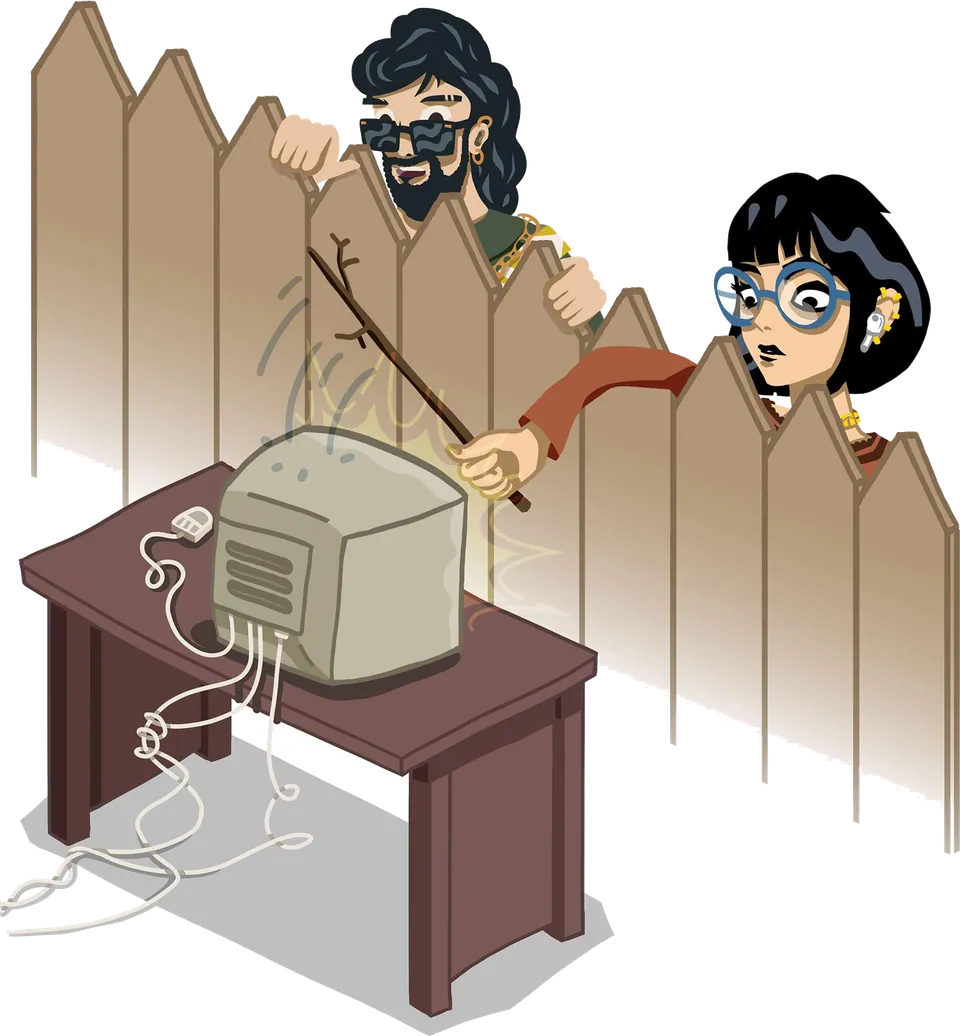
Every rank in Crown Shuffle is a real medieval job. Here's what each one involved around 1300, and what our version picked up from the future.
1. The Beggar
The friars of the 1200s begged for a living on purpose. It was a religious vow, and a respected one.
In Crown Shuffle: a latte habit and a begging sign that accepts crypto.
2. The Farmer
Most people in 1300 farmed, and many owed their lord a few days of unpaid work every week.
In Crown Shuffle: heart-shaped sunglasses and a lot of followers.
3. The Grave Digger
Medieval churchyards kept running out of room, so old bones were dug up and stacked in charnel houses.
In Crown Shuffle: a funeral playlist and podcast reruns about ancient curses.
4. The Baker
Sell a short loaf in medieval London and you could be dragged through the streets with it hung round your neck.
In Crown Shuffle: burnout, cinnamon buns and three unanswered messages from her ex.
5. The Smuggler
England started taxing wool exports in 1275, which did wonders for night-time boating.
In Crown Shuffle: forged scrolls and a strict no-receipts policy.
6. The Tailor
In 1294 the King of France decided, by law, how many new outfits a year each rank could buy.
In Crown Shuffle: strong opinions about linen-on-linen.
7. The Scribe
Medieval scribes left complaints in the margins: cold hands, bad ink, thank God that's done.
In Crown Shuffle: seven autobiographies and the urge to correct your grammar online.
8. The Bard
Real bards trained for years. In Ireland, people believed a poet's insults could raise blisters on your face.
In Crown Shuffle: a lute painted like a hot rod, and an amplifier powered by mild sorcery.
9. The Innkeeper
Much of medieval England's ale was brewed by women, and a pole over the door meant a fresh batch.
In Crown Shuffle: free therapy sessions, payable in beer.
10. The Merchant
By 1300 Italian merchants were moving money on paper and keeping some of the first double-entry accounts.
In Crown Shuffle: exclusive import rights to inflatable flamingos.
11. The Knight
Knighthood cost so much that English kings had to order men to become knights, or pay a fine.
In Crown Shuffle: leg day, protein shakes and suspicious selfies.
12. The Tax Collector
Medieval England kept tax receipts on notched wooden sticks. Burning the old ones in 1834 set Parliament on fire.
In Crown Shuffle: a suspiciously advanced tablet.
13. The Priest
In 1300, the year the game is set, the first papal Jubilee filled Rome with pilgrims, and the offerings were collected with rakes.
In Crown Shuffle: a gold chain, shades and the tavern where lost souls end up.
14. The Royal Advisor
Medieval royal advisors were often bishops, because they could write. Getting too close to the king could cost you your head.
In Crown Shuffle: the only one at court who can convert a PDF scroll.
The medieval social ladder, reshuffled
Medieval writers liked to split society into three neat groups: those who pray, those who fight and those who work. Clergy, nobles, peasants. Everyone knew their place, in theory. In practice, the towns filled up with merchants, craftsmen, innkeepers and tax men who didn't fit any of the three boxes, which annoyed the people who liked the boxes.
Crown Shuffle's ladder has fourteen steps instead of three, from the Beggar at 1 to the Royal Advisor at 14. And look who's missing: the King. In this kingdom the throne isn't a card you're dealt. It's a title you win by emptying your hand first, and lose the moment someone does it faster.
Were the Dark Ages really dark?
Not really, and most historians stopped using the term a long time ago. The idea of a dark age after Rome is usually traced to the Italian poet Petrarch, who in the 1300s described the centuries since Rome's fall as a time of darkness. Meanwhile the real Middle Ages had monasteries copying classical books, scholars in the Islamic world translating and building on Greek science, and the first universities, in Bologna, Paris and Oxford.
So our premise isn't that far off. We just turned it up: what if nothing got lost at all, and the ideas kept stacking? You end up with a medieval kingdom where the Priest has Wi-Fi. The longer version is on the blog: the year is 1300, and the Dark Ages never happened.
Where the game comes in
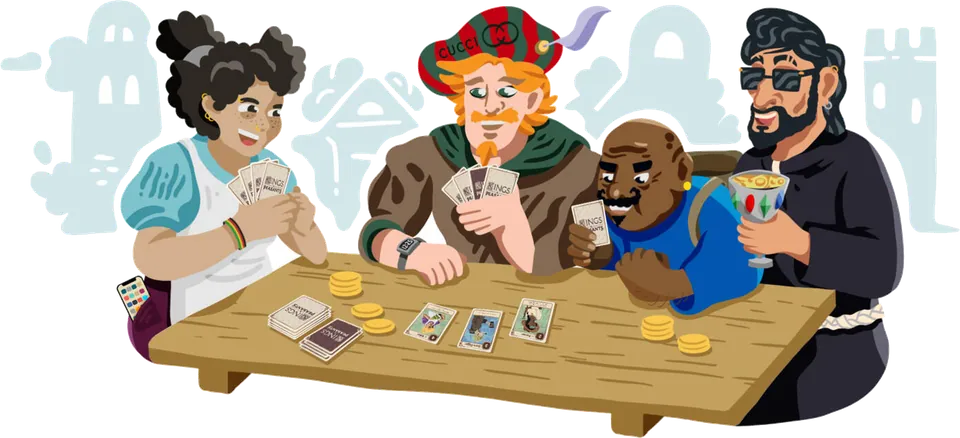
Crown Shuffle is a medieval card game for 2–8 players, and society still runs on rank. Rank is just up for grabs every round. Pay taxes to the monarchs, unleash ability cards, manipulate the pile and survive the social shuffle. Or risk ending up scrubbing the royal chamberpot.
Questions about the world
- When is Crown Shuffle set?
- In the year 1300, in a medieval kingdom where knowledge was never lost. Kings, knights and peasants, plus tablets, amplifiers and Wi-Fi.
- Is it historically accurate?
- The jobs are. The gadgets very much aren't. Every character page has a short note on what that job was really like around 1300, in case you need to win a pub quiz.
- Why do medieval characters have modern stuff?
- Because in this world nobody burned the books. Ideas kept piling up for centuries, so the Bard got his amplifier a little early.